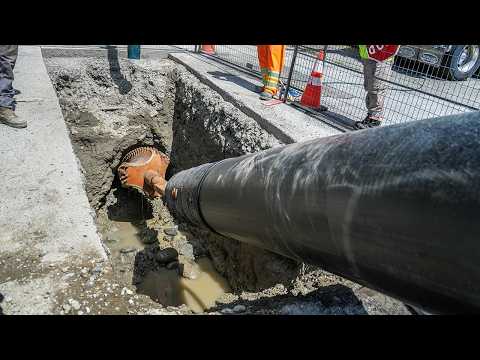
How a Very Long Storm Main Pipe Is Pulled Deep Underground Without Digging a Trench
Sandpiper just installed 61 metres of 24-inch HDPE storm pipe using Horizontal Directional Drilling (HDD) beneath Stewardson Way in New Westminster on behalf of the City of New Westminster, within the Heritage Permit Area. Before the pullback begins, our crew fuses individual HDPE pipe sections together on site, creating one continuous 61-metre-long pipe that can be installed in a single pull beneath the roadway. This trenchless installation method allows one of the city's busiest transportation corridors to remain open while minimizing disruption to residents, businesses, and traffic.
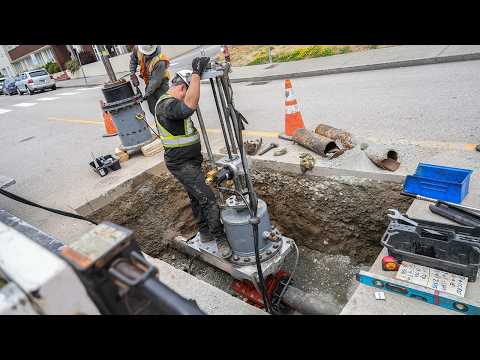
Wet Taps and Reverse Thrust Blocks in Watermain Installation Explained
When we work on a watermain, the process is usually straightforward: isolate the pipeline, repair or replace the required section, then restore water service. Simple enough. Occasionally, however, we take on projects where shutting down the watermain simply isn't an option. In these cases, the water must continue flowing while construction is underway.
So, how do we replace an aging watermain without turning the water off?
The answer lies in a combination of specialized techniques known as a wet tap and reverse thrust block.
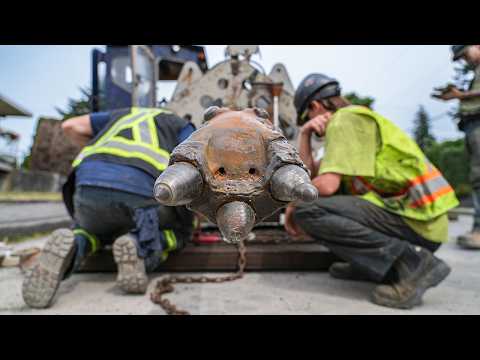
What Is Trenchless Utility Installation—and Why Is It the Preferred Solution for Some Projects?
Sandpiper is currently installing a new storm main that must cross busy Stewardson Way and the SkyTrain Expo Line in New Westminster—all while keeping one of the region's busiest transportation corridors fully operational. So how do you install a major underground utility without closing roads or disrupting rail service?
The answer is Horizontal Directional Drilling (HDD).
HDD is a trenchless construction method that allows underground utilities to be installed with little to no surface disruption. Rather than excavating long, open trenches through roadways, parking lots, retaining walls, or landscaped areas, crews work from strategically located entry and exit pits while specialized drilling equipment bores a precise path underground.
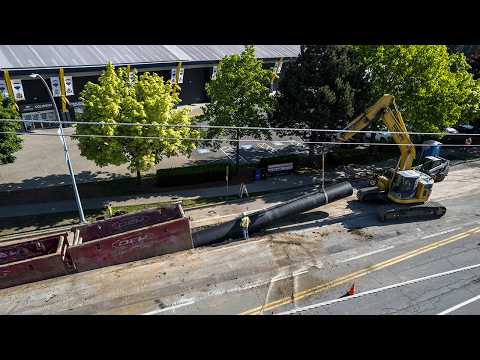
How a 100-Foot Sanitary Sewer Forcemain Is Installed Underground | HDPE Fusion in Action
Watch how Sandpiper Contracting installs a 100-foot section of sanitary sewer forcemain using heat-fused HDPE pipe. As part of a design-build upgrade for the City of Chilliwack, BC, the crew joins two 15-meter pipe sections and installs up to 30 meters at a time. This project will upgrade a total of 970 meters of critical sewer infrastructure.
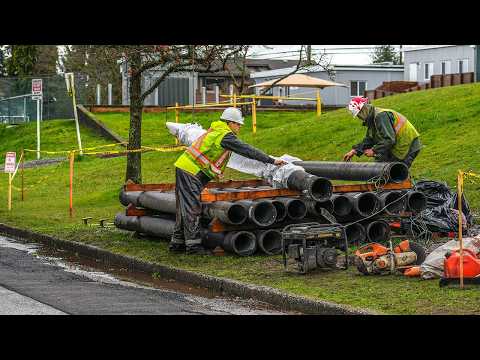
Water Main Replacement and Storm Separation Project at Hamilton Street, New Westminster
We are installing an 8-inch ductile iron water main along Hamilton Street, between 19th and 16th Streets. In total, over 600 meters of pipe will be laid at an average depth of 1.3 meters below ground.
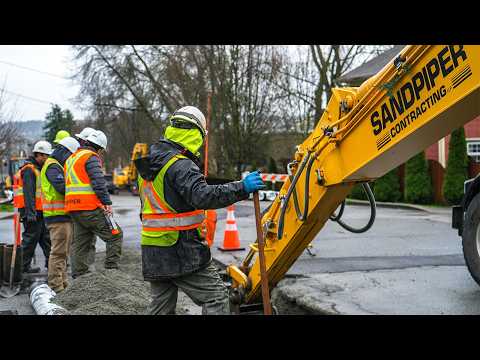
Sandpiper Contracting: Municipal & Civil Construction in Vancouver Area Since 1991
Sandpiper Contracting LLP is a privately owned civil contracting company based in Surrey, British Columbia. We specialize in building municipal and private infrastructure across the Lower Mainland.
- 35+ years of earthworks
- 3+ decades of on-the-ground experience
- Projects in every municipality in the region
- Both large-scale developers and private clients
- From watermains & road reconstructions to full subdivision developments
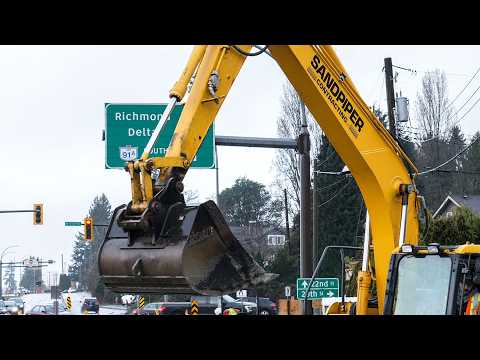
Sandpiper Tackles Major Watermain, Storm Sewer Upgrade at a Heritage-Sensitive Site, New Westminster
Our crew at Sandpiper Contracting is now entering a critical and exciting phase of Metro Vancouver's $5-million watermain and storm drainage upgrade at the busy intersection of 6th Avenue and 18th Street in New Westminster, just off the iconic Queensborough Bridge - one of the Lower Mainland's key transportation arteries.
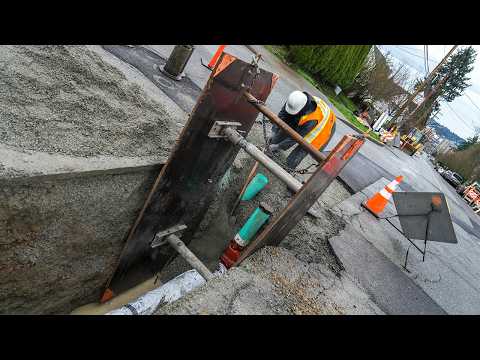
Watermain, Storm & Sanitary Sewer Replacement Project in New Westminster
Currently our crew is working on a watermain & sewer line project on 11th street between 3rd and 6th svenues in New Westminster and it is moving faster than expected. Once completed we will have replaced 243 meters of various sizes of storm and sanitary sewer at a depth of 3 to 4 meters, over 800 meters of watermain, installed 9 major water tie-ins, 15 precast 1050mm manholes and 5 overbuild 1050mm manholes.