Date Posted : July 3, 2026
Municipal water distribution systems typically operate at pressures ranging from 60 to 150 psi (pounds per square inch). To put that into perspective, the tires on a typical passenger vehicle are inflated to about 32 psi. At 150 psi, every square inch of the pipe end is subjected to a tremendous amount of force.
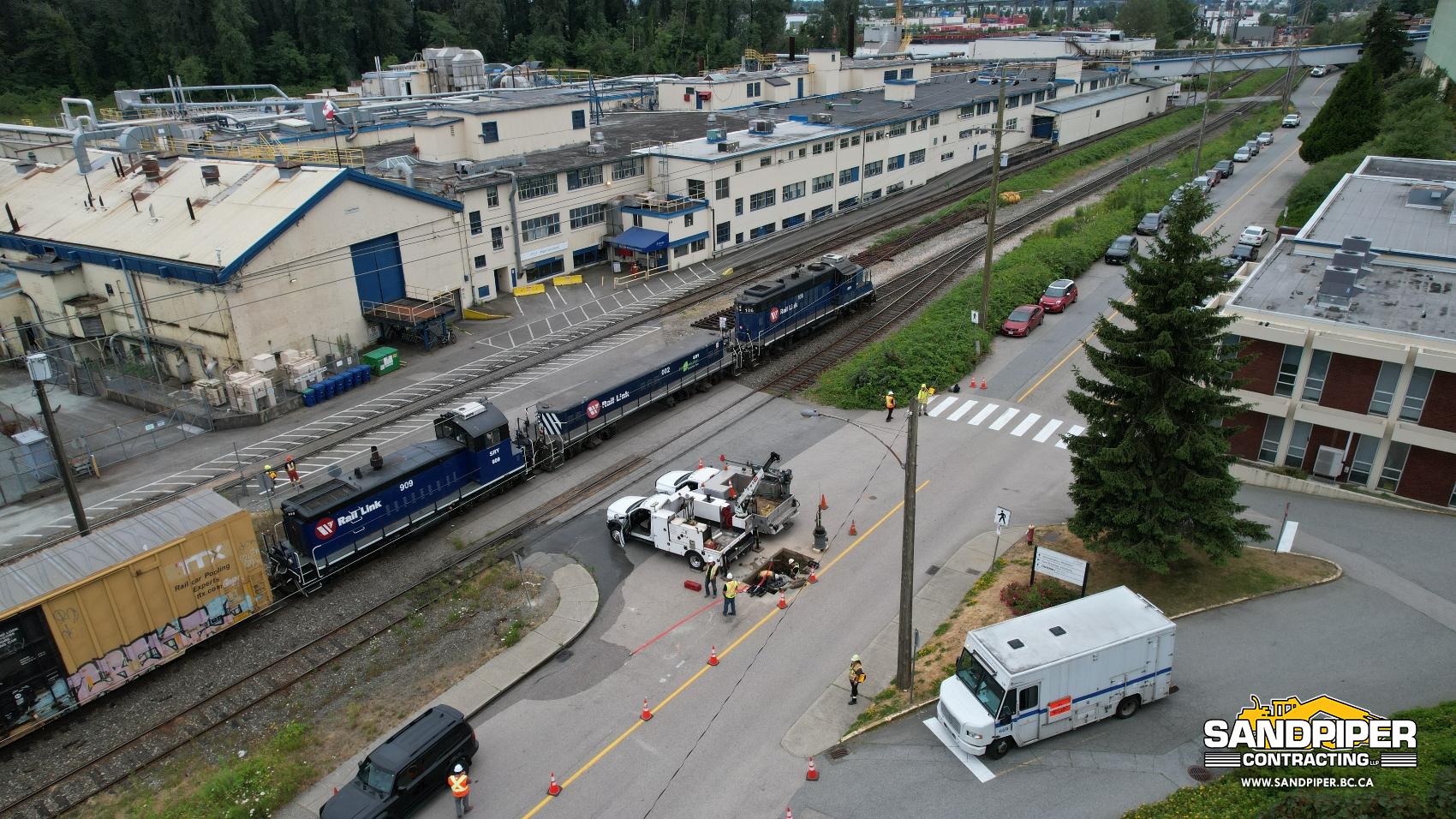
One such project is our current watermain upgrade along 5th Avenue in New Westminster. This watermain supplies several nearby businesses, including the Kruger Products paper and tissue manufacturing facility, where maintaining an uninterrupted water supply is critical to daily operations.
So, how do we replace an aging watermain without turning the water off?
The answer lies in a combination of specialized techniques known as a wet tap and reverse thrust block.
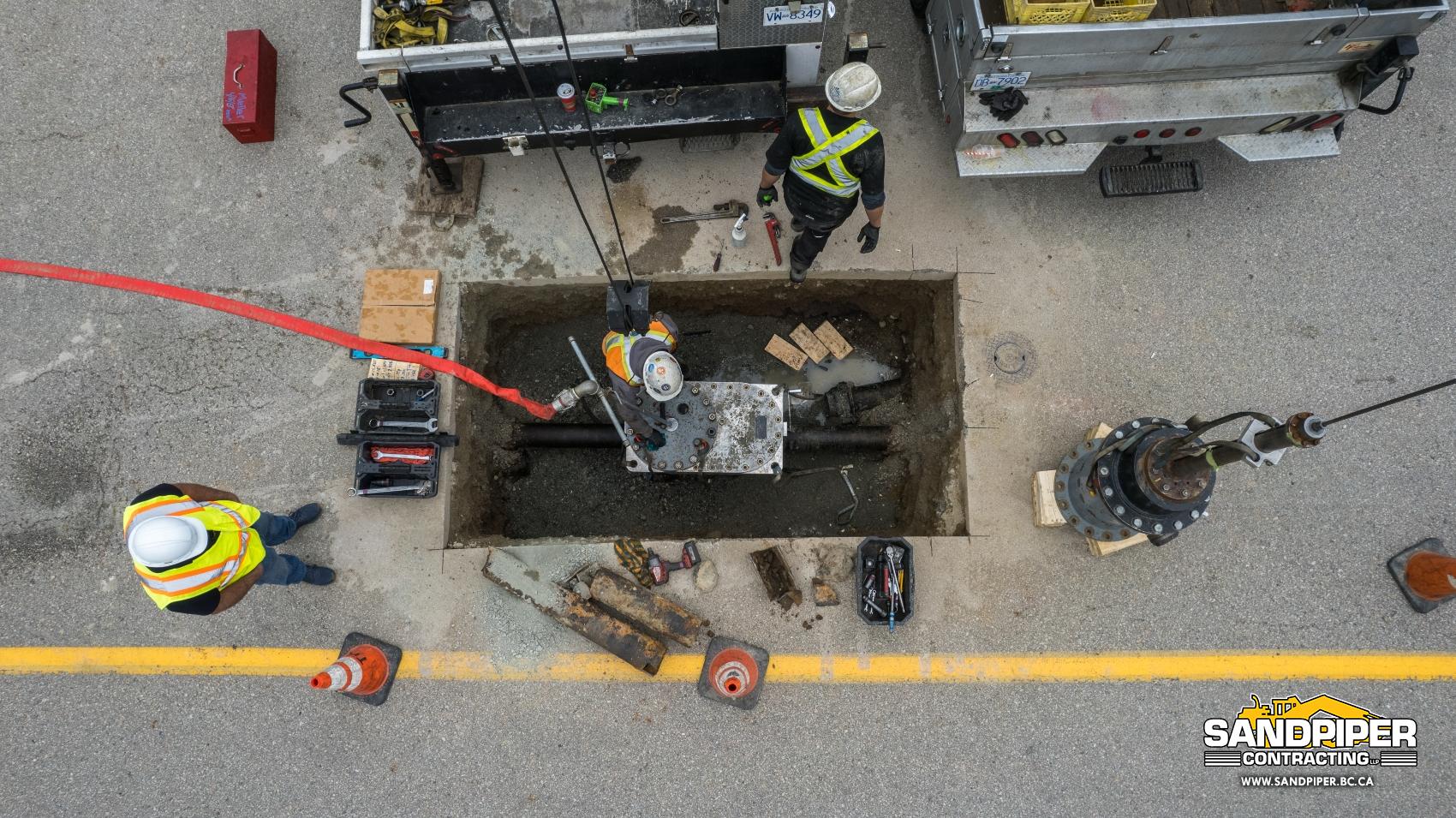
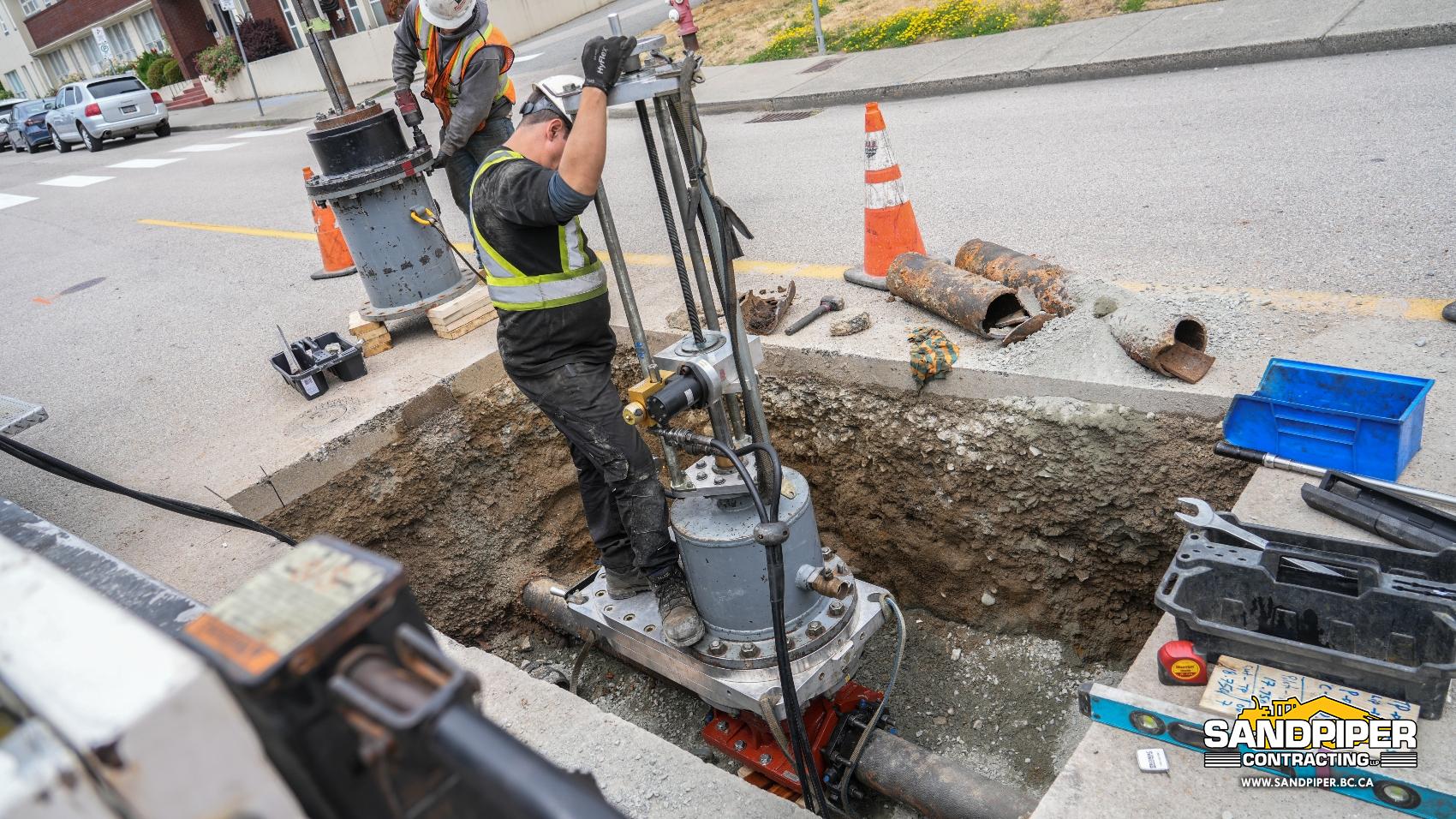
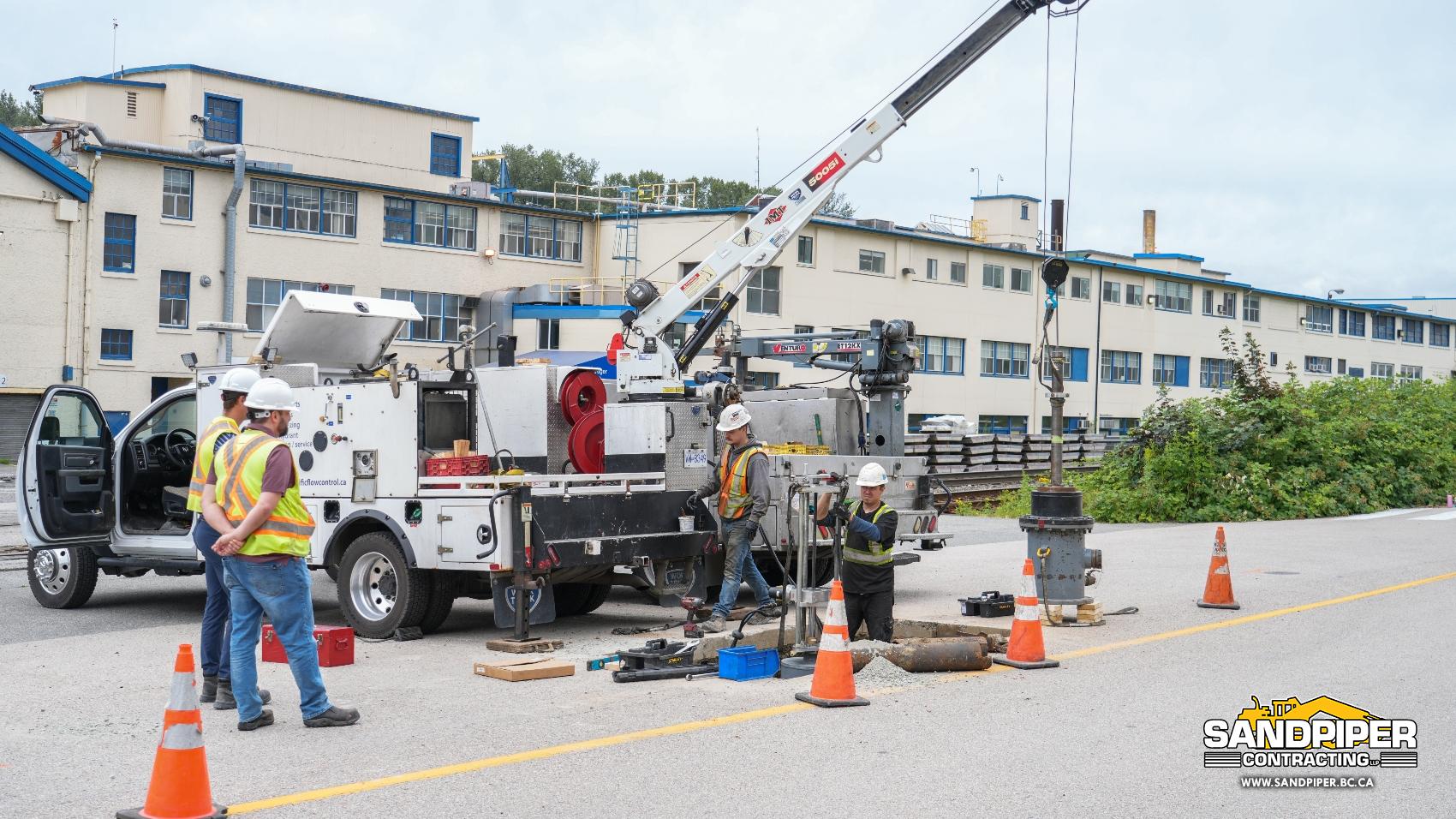
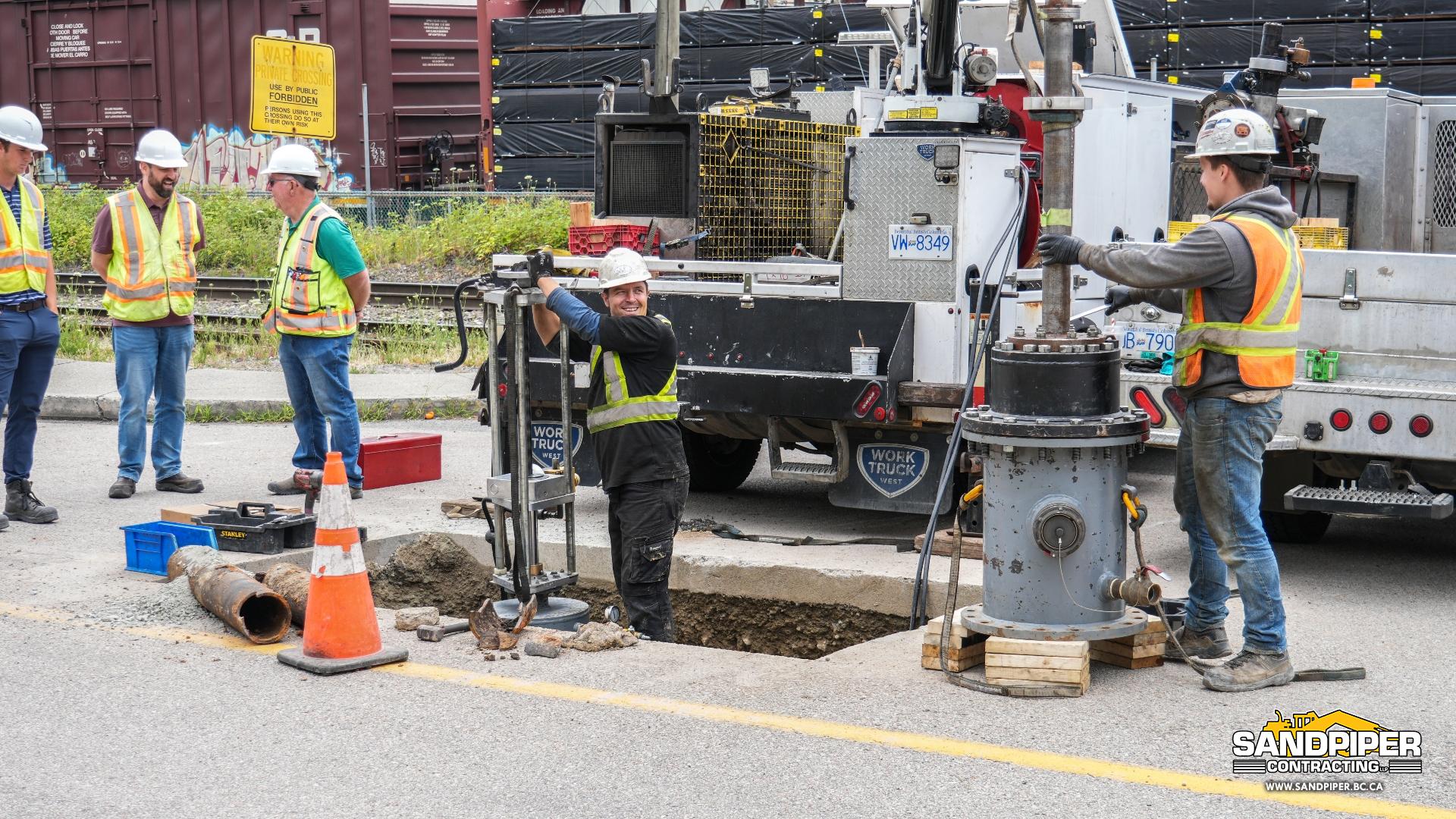
A wet tap (also known as a hot tap) is a specialized procedure that allows crews to connect a new watermain to an existing, pressurized pipeline without interrupting water service.
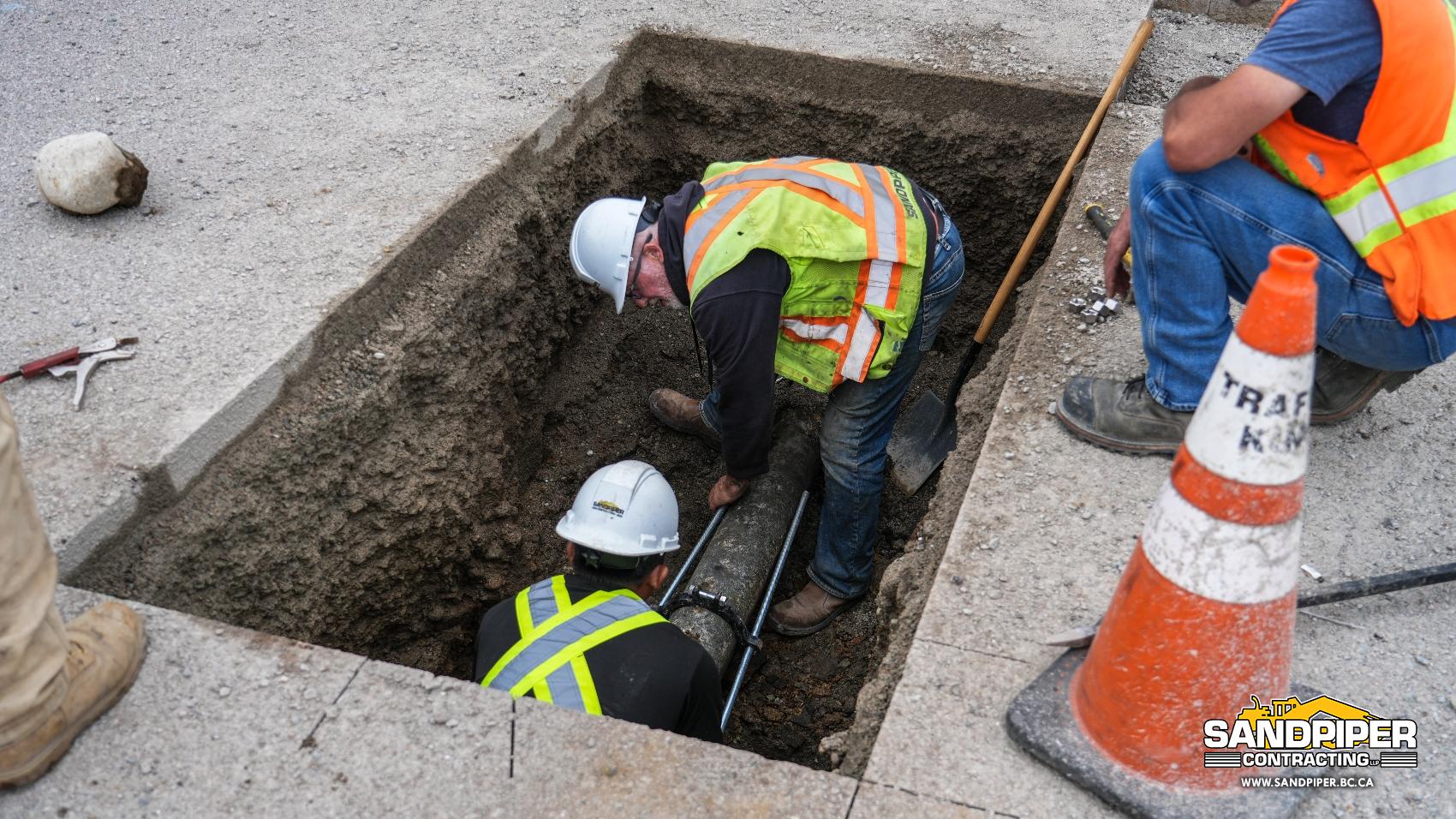
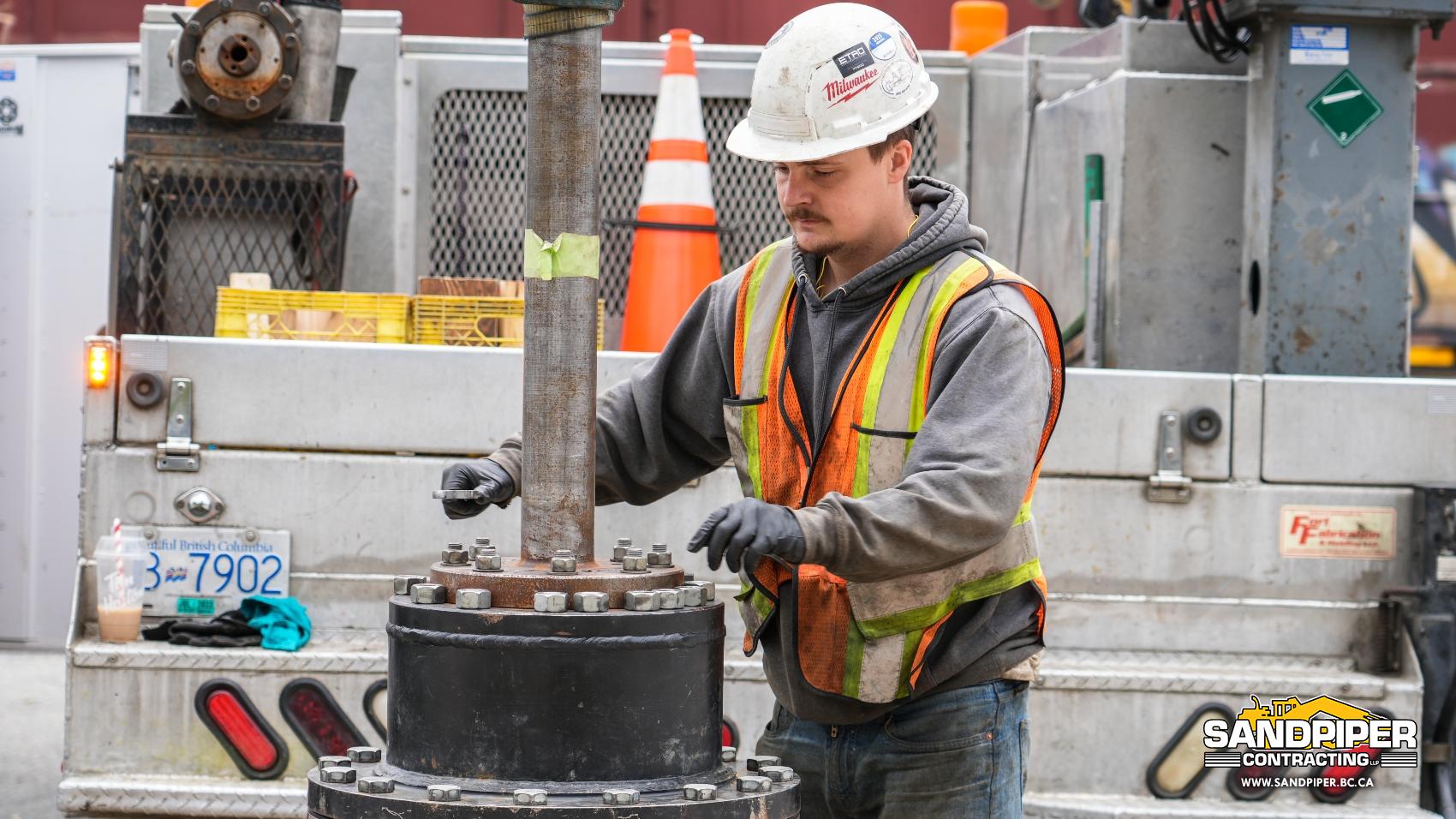
"With a wet tap, we install a tapping sleeve and valve around the existing live watermain," explains Bryan Mills, Superintendent with Sandpiper. "Using a specialized pressure-contained tapping machine, we drill through the pipe wall while the system remains fully pressurized. Once the connection is complete, the new watermain can be integrated without disrupting service to customers."
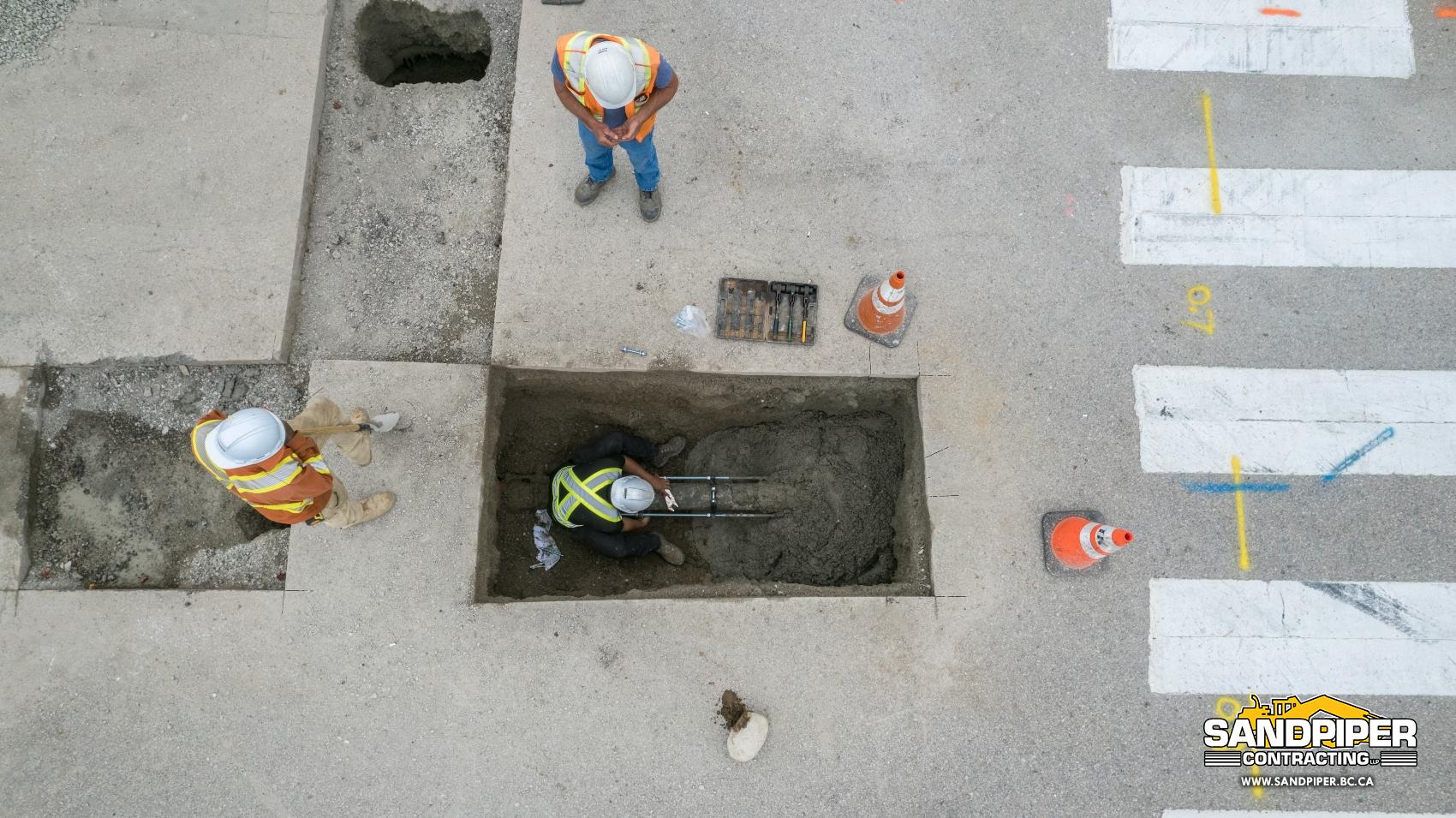
Once the wet tap is complete, it allows us to reroute the existing watermain while keeping it fully operational. On this project, the new watermain must dip beneath a newly installed storm sewer before rising back to its original elevation. This change in alignment creates a vertical "S" bend in the pipeline. Under pressure, changes in direction generate significant hydraulic thrust forces that can place tremendous stress on pipe joints and fittings. To safely control these forces while work continues, we construct a reverse thrust block.
Municipal water distribution systems typically operate at pressures ranging from 60 to 150 psi (pounds per square inch). To put that into perspective, the tires on a typical passenger vehicle are inflated to about 32 psi. At 150 psi, every square inch of the pipe end is subjected to a tremendous amount of force.
That pressure creates significant thrust forces wherever water changes direction or reaches a dead end. Without adequate restraint, the pressure can force pipe joints apart or even propel a capped pipe section out of the ground.
For this project, our crews constructed a substantial reverse thrust block using reinforced concrete in 25 MPa (megapascals) minimum. It can withstand at least 25 Megapascals of pressure before failing or cracking (roughly 3,600 psi or pounds per square inch).
"A reverse thrust block is designed to counteract the force created by pressurized water pushing against a capped or terminated pipeline," Mills explains. "It transfers those loads into the surrounding undisturbed native soil, preventing movement of the pipe and maintaining the integrity of the system until the new watermain is fully commissioned."
Proper thrust restraint is a critical component of watermain construction. Without it, the immense hydraulic forces inside the pipe could separate joints, cause flooding, erode surrounding soil, damage infrastructure, and create serious safety hazards.
Once the new watermain section has been tested, disinfected, and commissioned, the old pipeline is retired, and the new system begins serving the community.
By the time a large section of the old watermain was loaded onto a dump truck, the businesses along 5th Avenue—including Kruger Products—and their customers likely never noticed anything had changed. Their water service remained uninterrupted while critical underground infrastructure was successfully upgraded beneath their feet.
That's the goal of modern watermain construction: keeping communities running while improving the infrastructure they depend on every day.
Copyright © SANDPIPER CONTRACTING LLP
Sitemap | Built by GoOnline.ca