Date Posted : August 18, 2026
We never expected a trenchless pipe-pulling video to become a 61,000-view attraction, but we're certainly not complaining.
To say we were surprised would be an understatement. We're delighted to see so many people interested in what we do—and even more impressed by the number of questions that followed. Before long, the comment section had practically turned into its own little trenchless-technology discussion board.
So, we thought we'd share some of the questions and answers here.
A big thank-you to Shawn Sedlar, Project Manager with Directional Mining & Drilling, who generously took on the unofficial role of resident HDD expert and provided some remarkably detailed answers. Thanks, Shawn—we appreciate it!
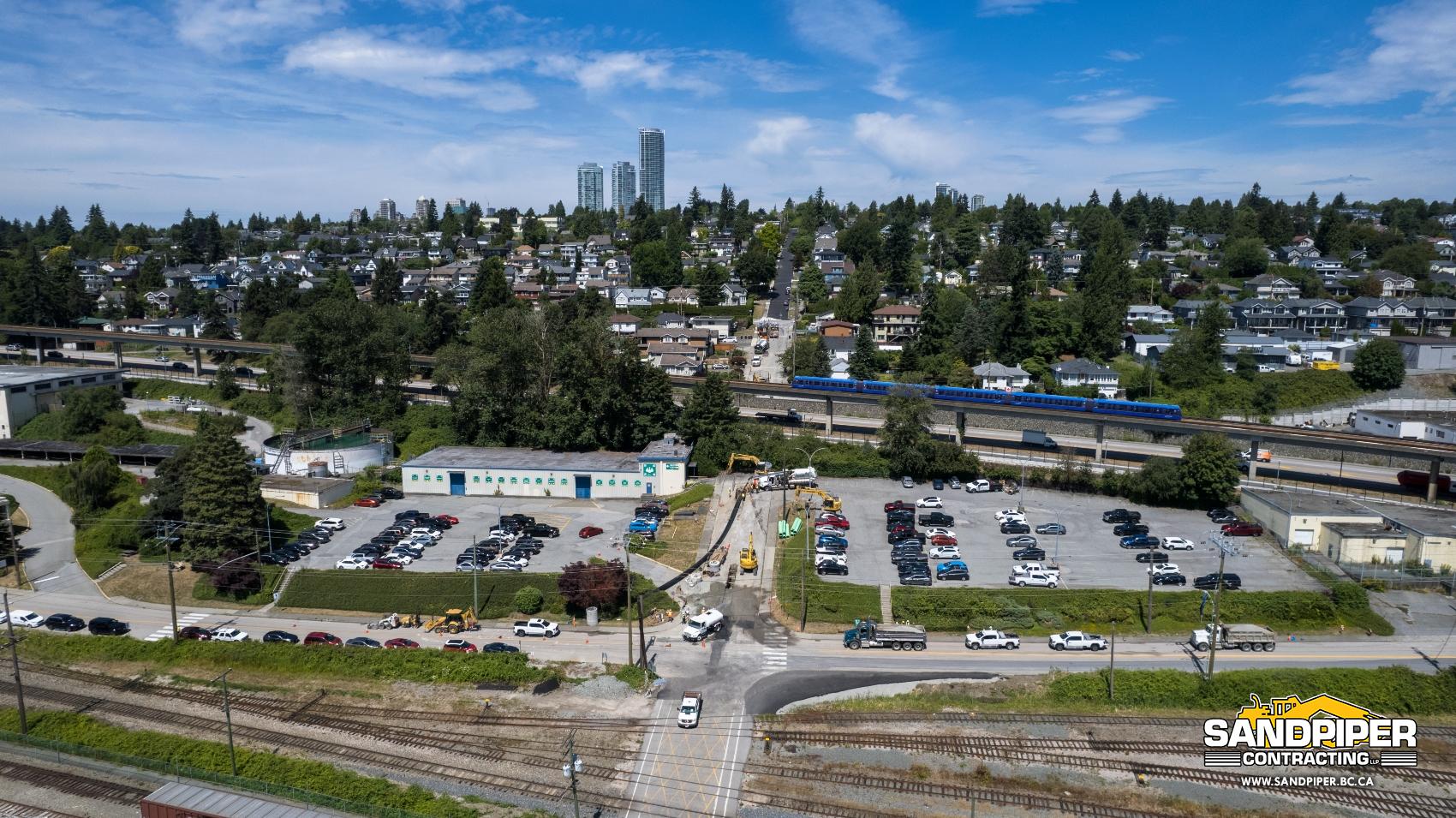
A: No. We locate and predetermine the position of existing utilities before we start drilling. Not only did we pothole to confirm depths on every utility crossing, we were also crossing under a critical Metro Vancouver Sewer Line which required settlement and vibration monitoring to ensure their infrastructure was not impacted. Knowing what's already underground is a critical part of the process.
A: 100% correct. Mud is, in my opinion, one of the most important—and often overlooked—aspects of a successful HDD operation.
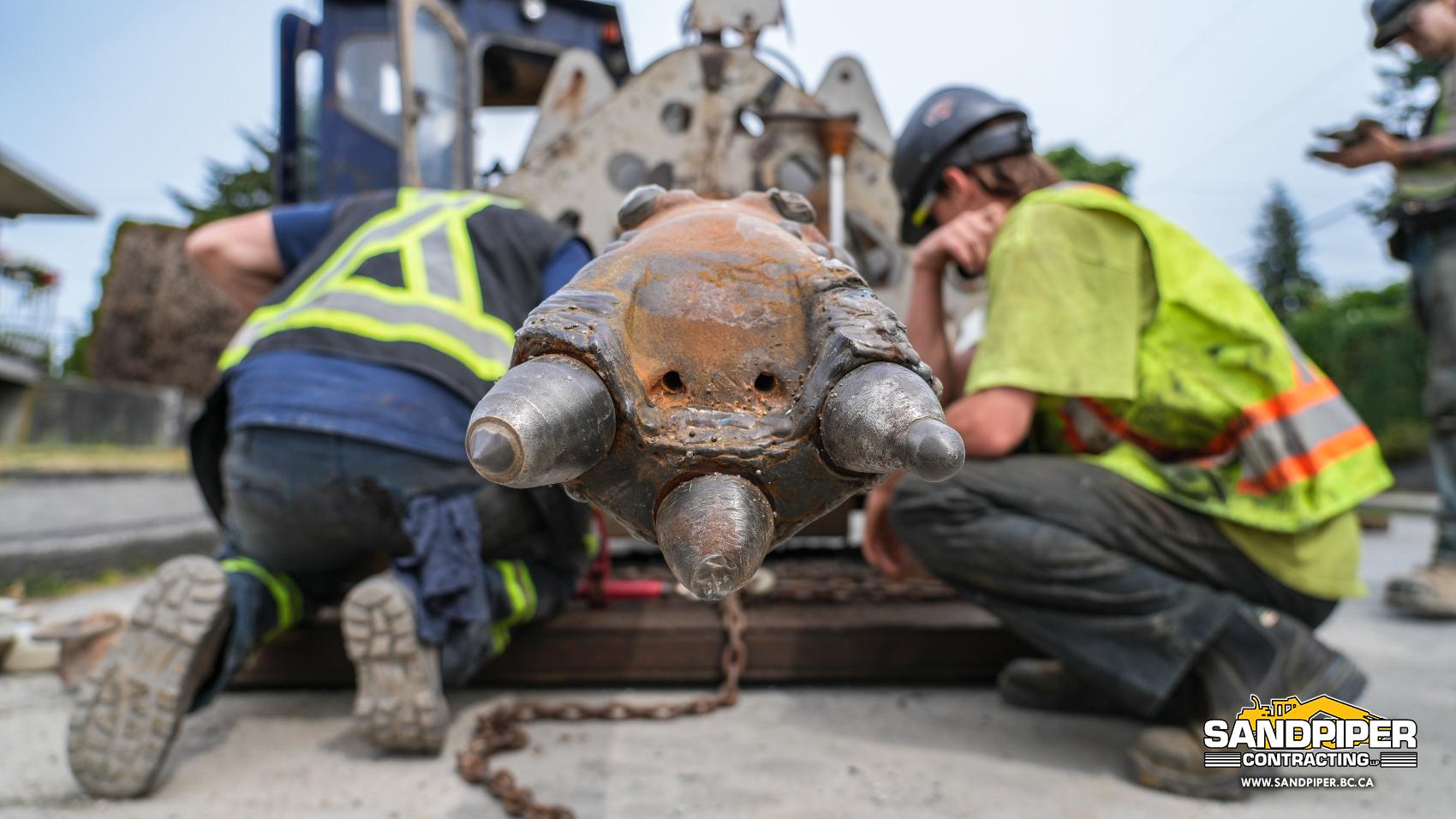
This particular bore was a little different because the exit was on a constant downward grade from the entry point. Once the pilot hole was through, the drilling mud naturally ran out through the lower hole during the reaming and pipe-pulling operations.
That approach only worked because we were drilling through dense glacial till, with conditions more comparable to bedrock. If we had been working in sand or loose soils, the mud engineers would have had to work their magic to maintain the bore.
A: Great point! We actually used two drills on this project.
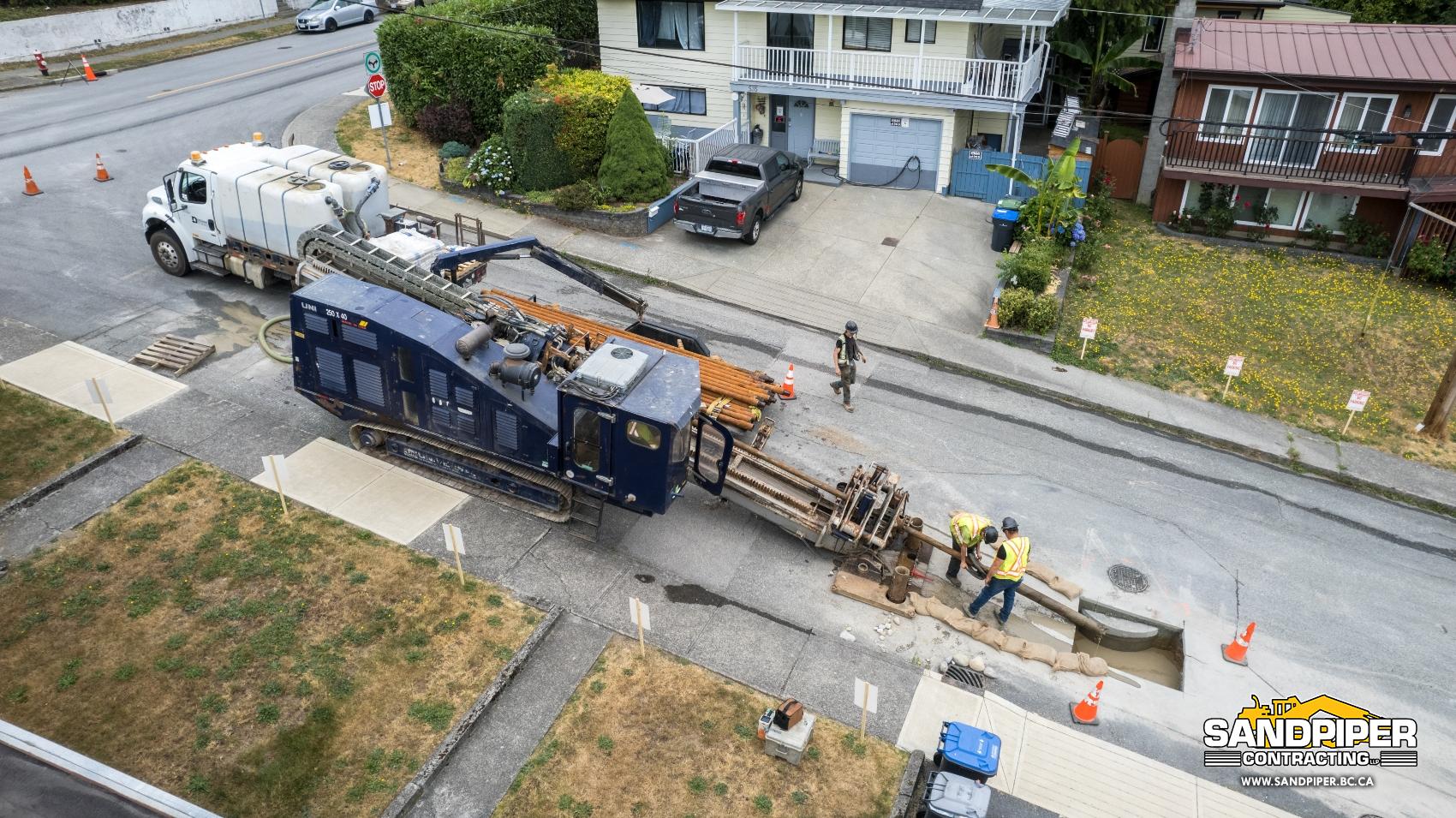
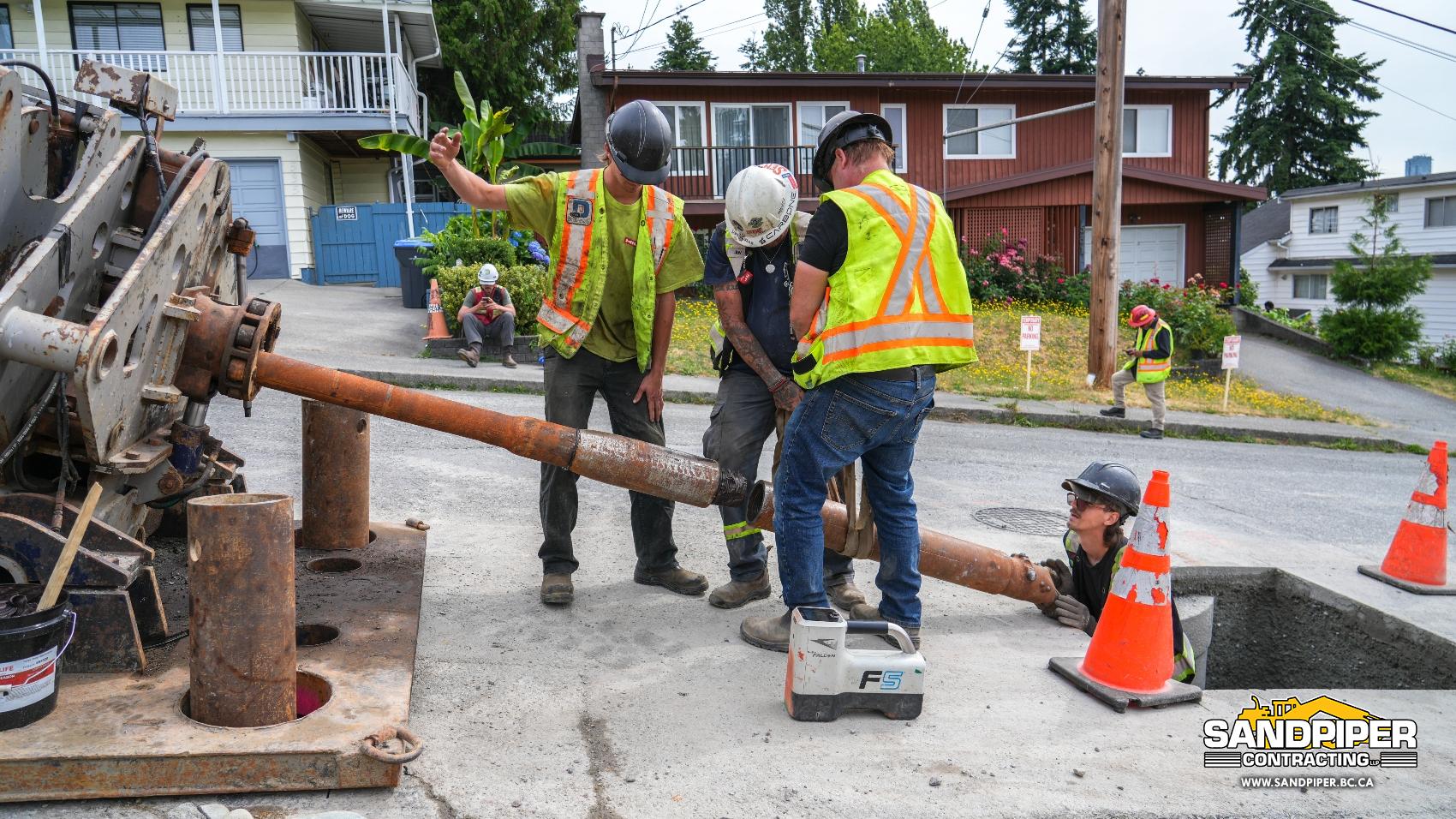
Because maintaining grade was critical while drilling through dense ground containing cobbles and boulders, the pilot hole was completed using a Ditch Witch AT40. That pilot hole was then used to pull in the drill pipe for the much larger Universal 240x400, which you see in the video, to perform the reaming and final pipe pull.
With 250,000 lbs. of pullback capacity and 40,000 ft-lbs. of torque, it's one of our favourite machines in the fleet.
A: Hi David. For this project, we used what's called the walkover steering method.
Near the drill bit is a transmitter that sends a signal to a locator positioned directly above it at ground level. The locator allows us to read the drill head's depth, pitch and direction, which is then relayed to the driller so adjustments can be made to keep the bore on its designed path.
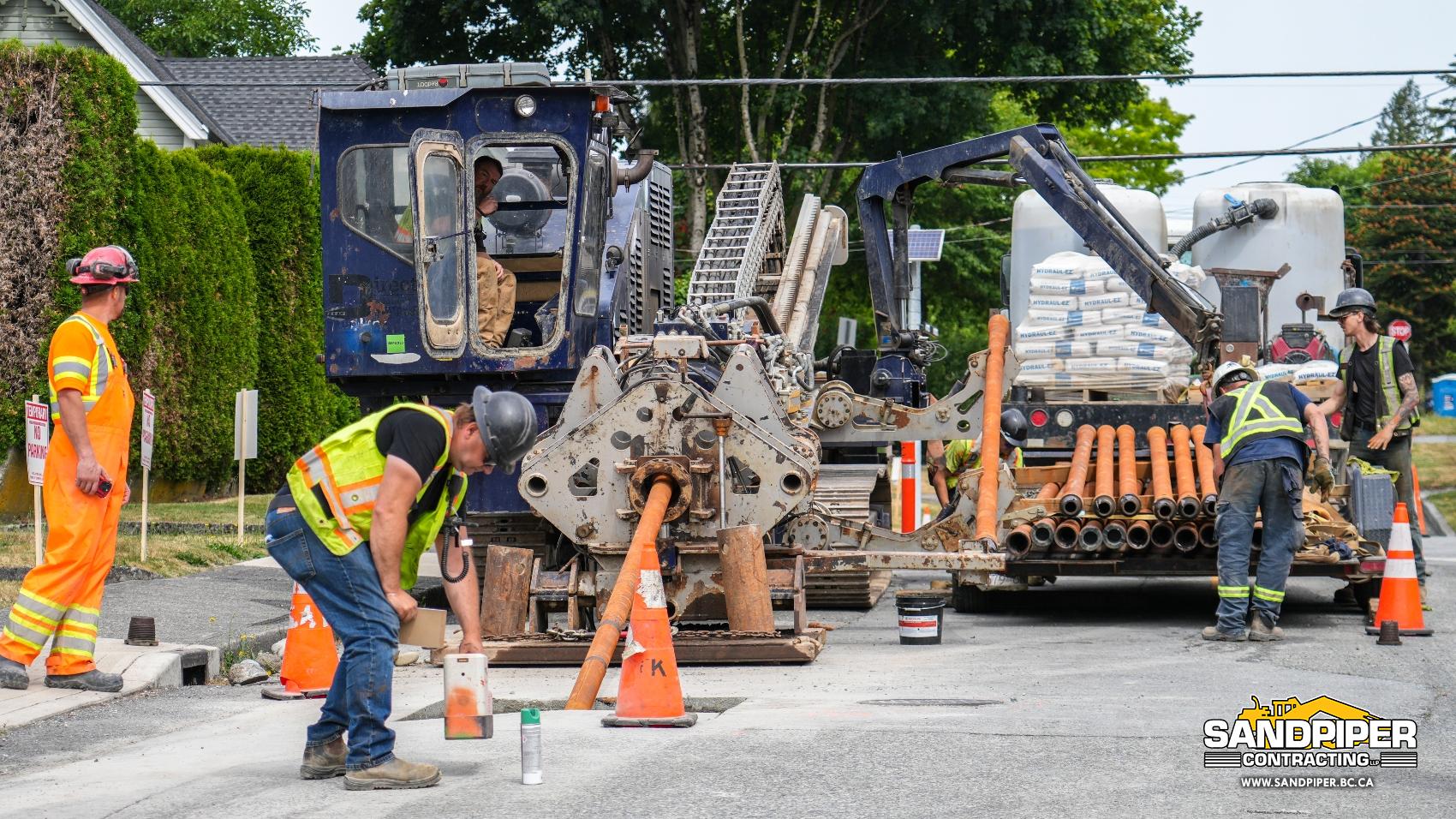
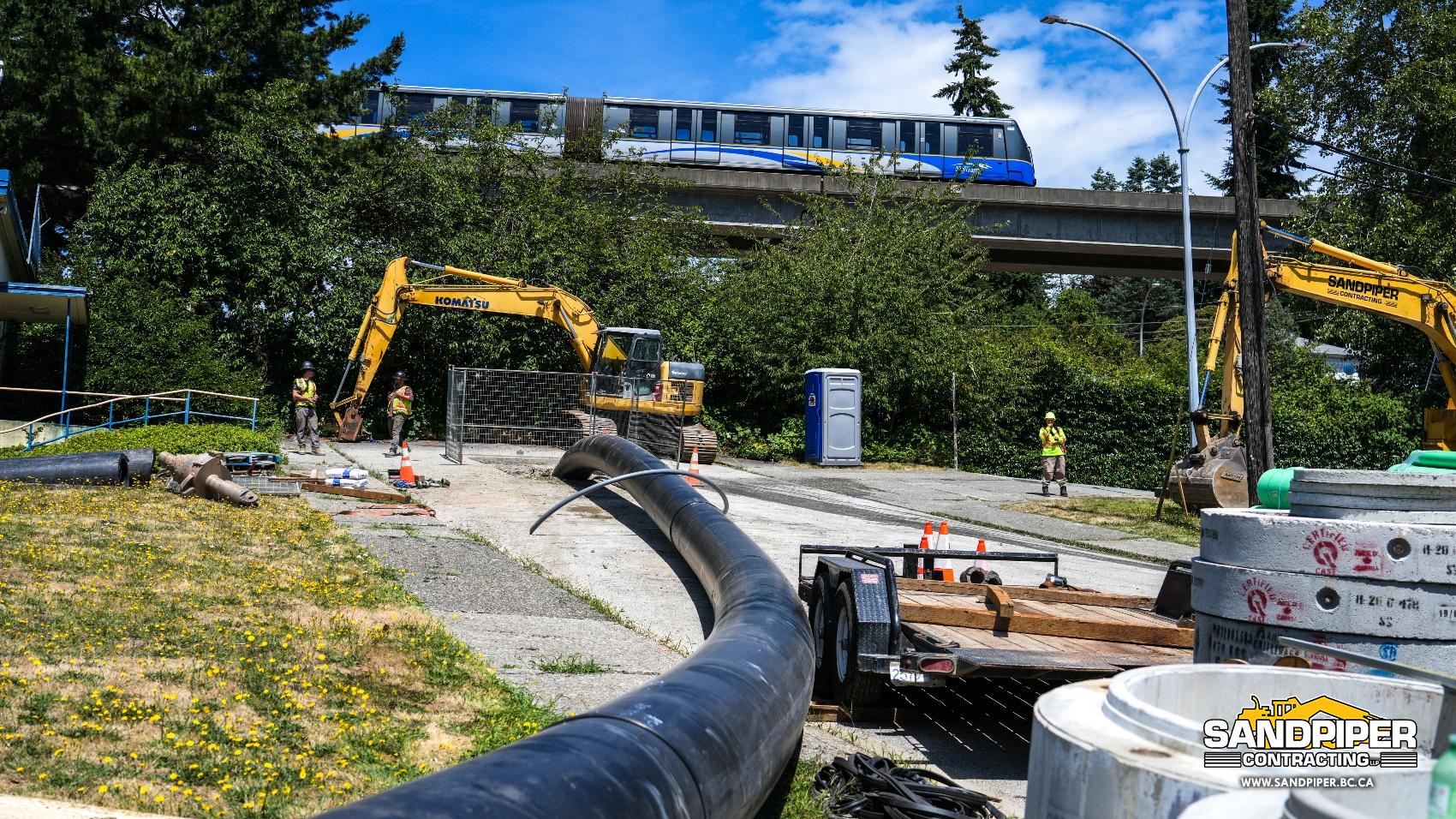
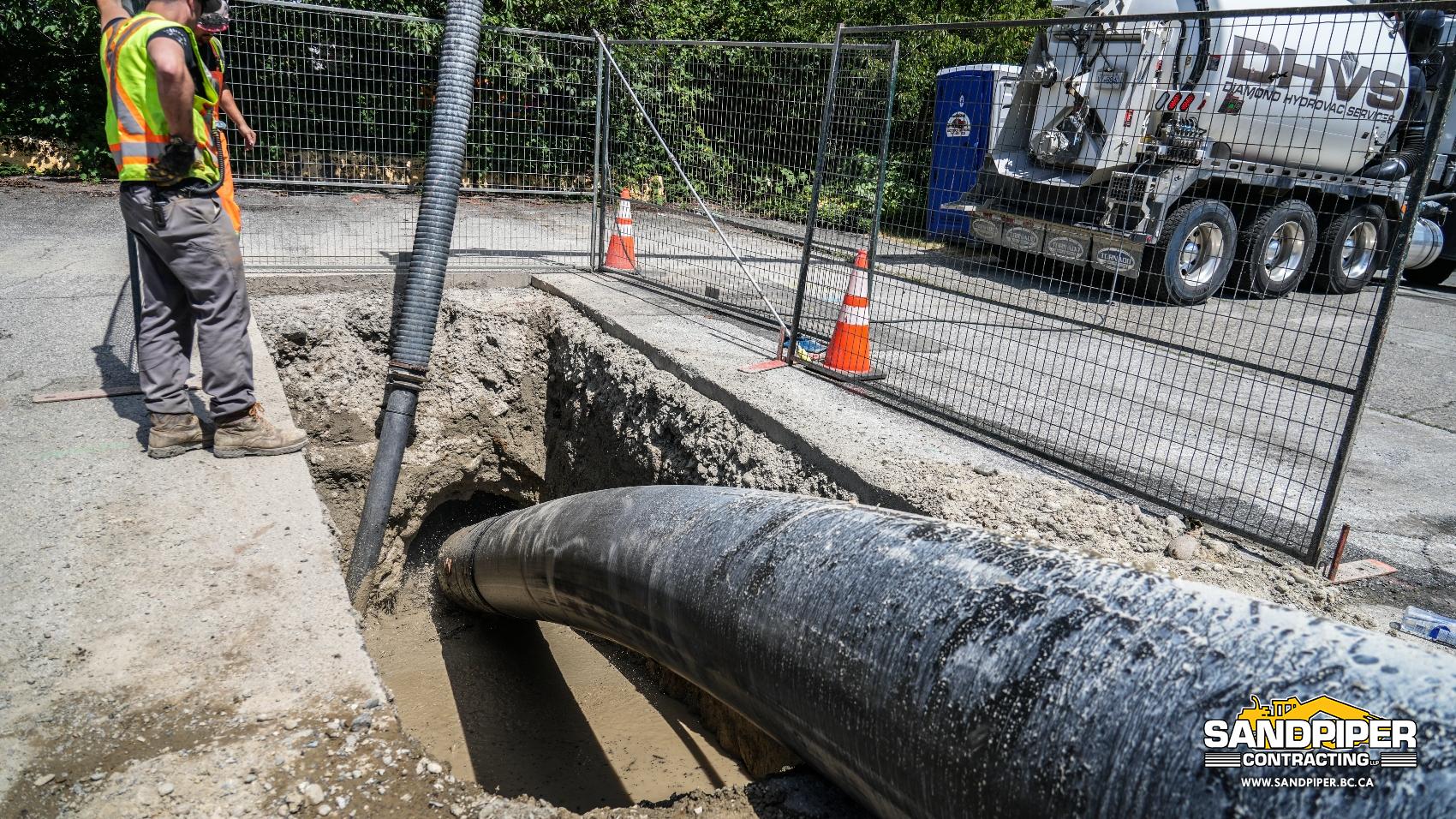
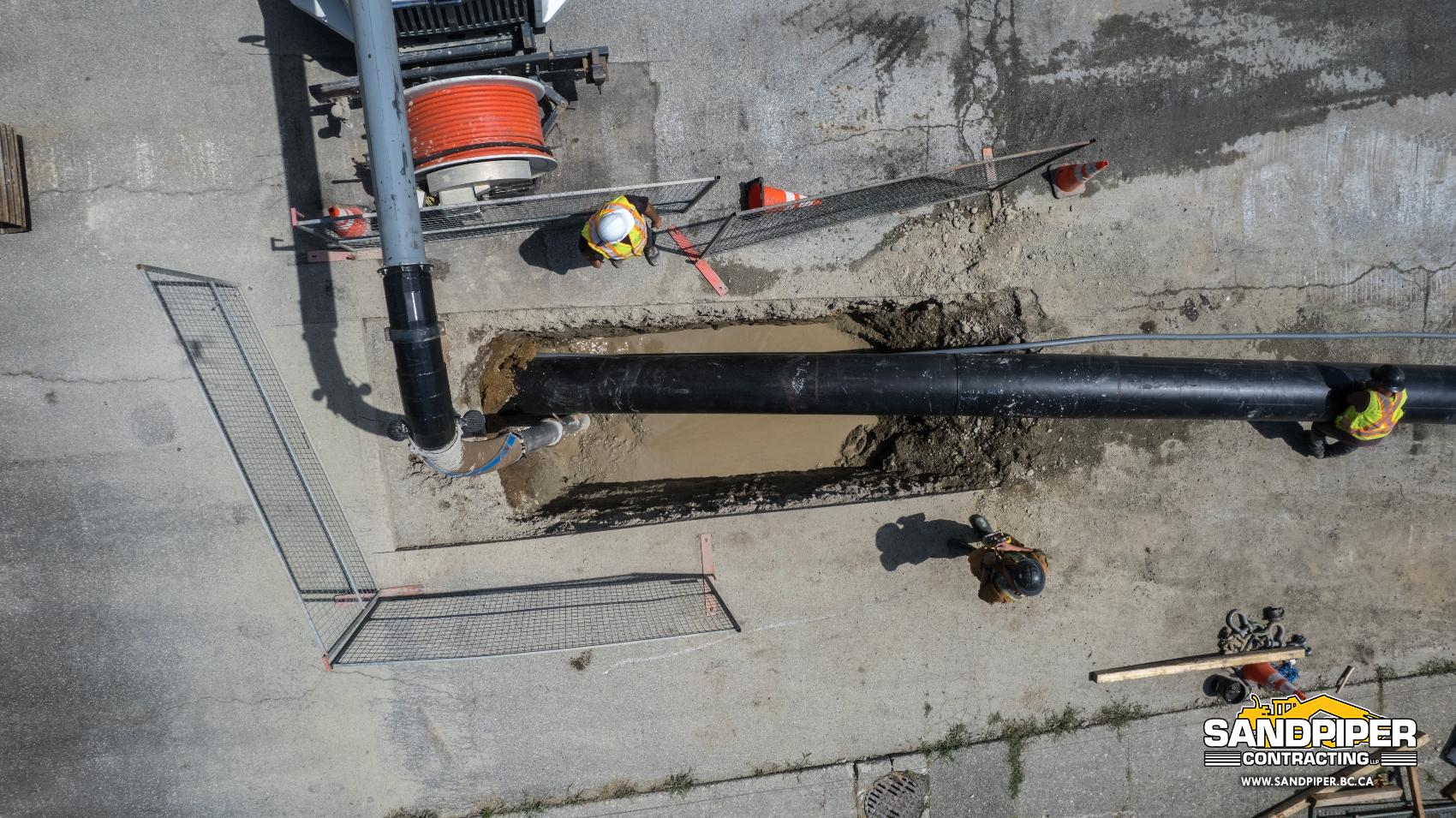
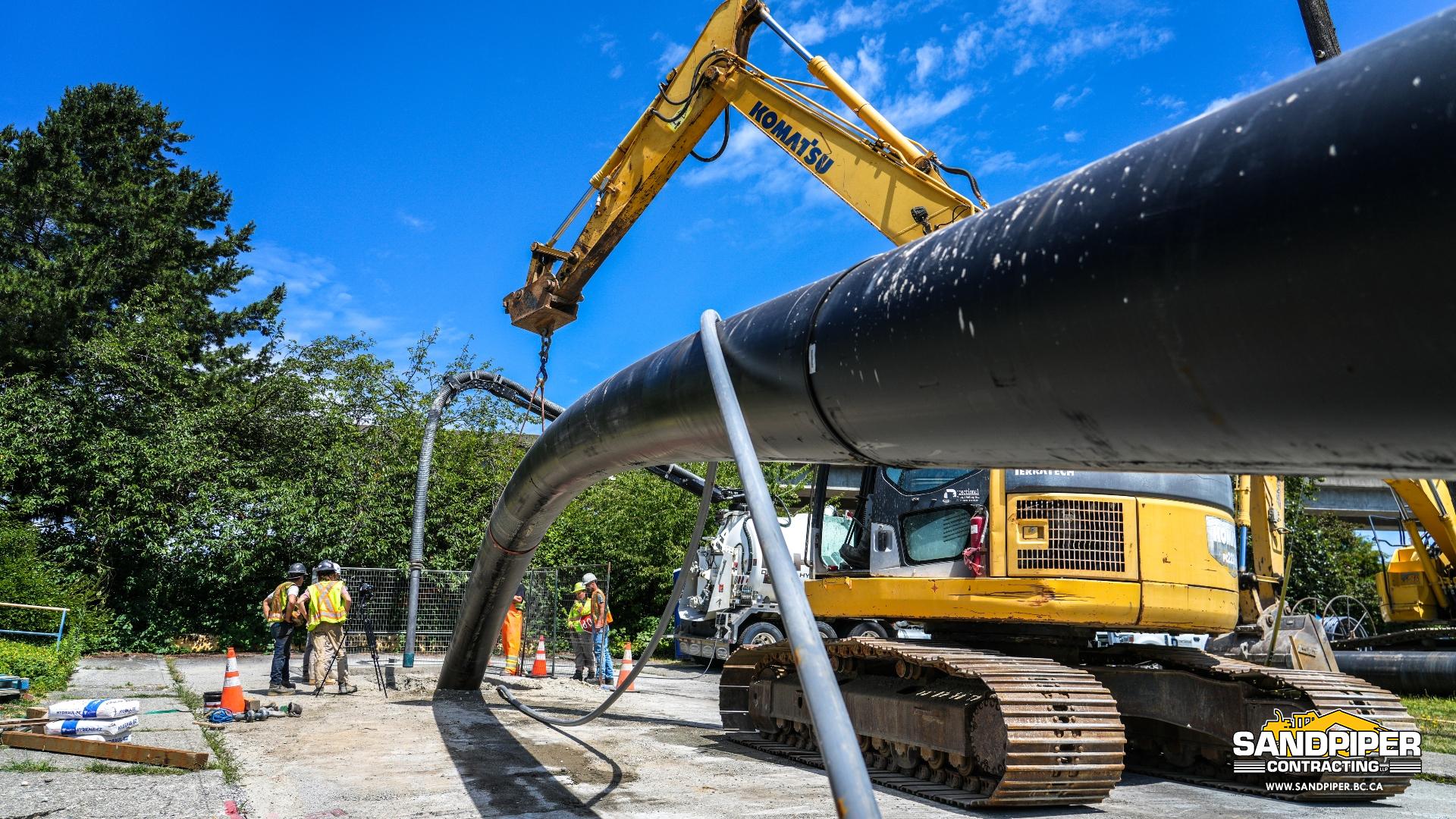
As for the space between the pipe and the borehole: if you look closely at the video, you'll see a 2-inch grey pipe being pulled alongside the 24-inch storm pipe.
Once the pull was complete, that smaller pipe served as a tremie line. We used it to pump Controlled Density Fill (CDF) from the high side of the bore until the annular space was completely filled.
This not only eliminates concerns about settlement, but also helps prevent erosion that could otherwise occur over time from water runoff.
A: The City is in the process of separating its combined storm and sanitary sewer system. This new pipe will be used for stormwater.
A: Hey Taylor, we've got you covered. Here's the video showing the entire process of drilling the pilot hole before pulling this very long storm pipe underground:
Watch the pilot-hole drilling video
A: Hi Terry. Our centreline is staked every 10 metres, with the design depth marked at each point. This allows us to check our position at every hub and make small adjustments along the way if needed to hit the next target.
There's also another video linked in the description where you can see our crew member taking measurements and relaying the information to the driller.
A: You're correct, sir. It's 24-inch HDPE DR17, with a wall thickness of almost 1½ inches.
We selected the pipe size to keep the inside diameter as close as possible to the existing 525 mm PVC pipe it would be tied into.
We never expected a trenchless pipe-pulling video to become a 61,000-view attraction, but we're certainly not complaining.
Thanks to everyone who watched, asked questions, shared the video and showed genuine curiosity about what happens underground. We may work below the surface, but apparently there's a pretty big audience interested in seeing what's down there.
Copyright © SANDPIPER CONTRACTING LLP
Sitemap | Built by GoOnline.ca